
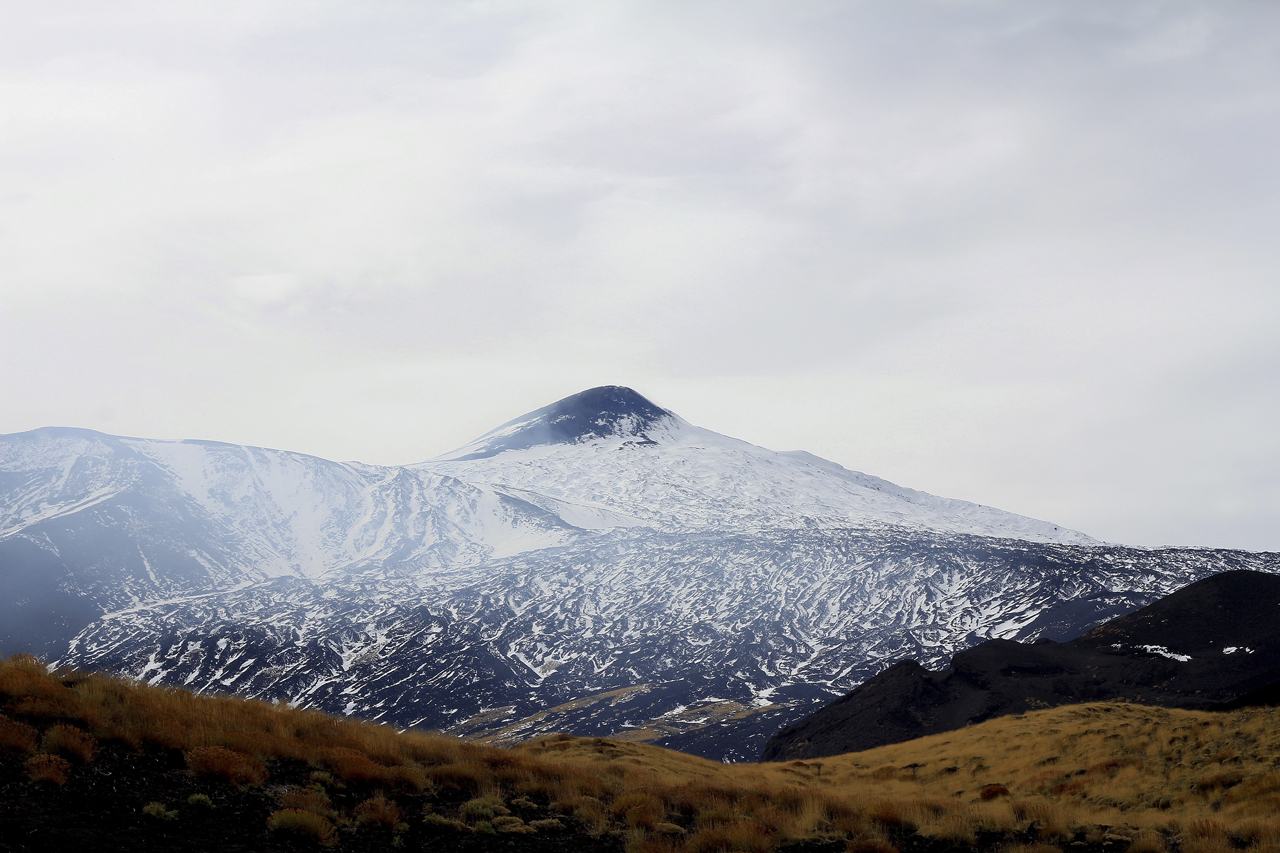
Etna is a living, unpredictable, magnificent volcano, and its weather is just as capricious. Planning a hike to the summit without knowing the altitude-specific weather forecasts can turn an unforgettable adventure into a dangerous experience. In this guide you will learn where to find the right bulletins and how to interpret them correctly.
Why Etna’s weather differs from that of the plains
In Catania the sun may be shining while at 3,000 metres of altitude a snowstorm is raging. The volcano creates its own microclimate: Atlantic currents collide with warm Mediterranean air, generating rapid changes in conditions, sudden banks of fog, and frost even in late spring. The temperature drops on average by about 6–7°C for every 1,000 metres of altitude gained, which means that setting off in a t-shirt from Taormina or Zafferana is no guarantee of similar conditions at the summit.
For this reason it is essential not to rely on generic forecasts from your weather app: altitude-specific, up-to-date and reliable data is required.
Where to find Reliable weather bulletins for Etna
There are several indispensable online sources and tools for anyone planning excursions on the volcano:
3B Meteo (3bmeteo.com/meteo/etna) is the most practical and immediate starting point: it has a page dedicated specifically to Etna with forecasts up to 15 days ahead (treat data beyond 24 hours with caution), the freezing level, snow line and wind intensity. Data is updated several times a day and presented in a format that is very easy to read even on a smartphone.
For those who want technical wind-at-altitude data, Windy (windy.com) offers an interactive map centred directly on Etna, with models updated every 6 hours. Particularly useful is the “wind at 850 hPa” layer, which corresponds approximately to 1,500 metres of altitude — a critical threshold for assessing exposure to gusts on the volcano’s ridges.
Another valuable tool is Mountain-Forecast (mountain-forecast.com), which provides summit-specific forecasts that can be consulted at various altitude levels.
How to Read a Bulletin: The Key Parameters
Knowing where to find a bulletin is not enough: you need to understand what to look for. These are the fundamental parameters to assess before heading up Etna:
Wind at altitude. Above 2,500 metres, gusts exceeding 40–50 km/h make it dangerous to proceed along the crater rim. Wind at altitude can be three or four times more intense than what is felt in the valley. Always check the forecast wind speed at the 700 hPa and 500 hPa levels.
Snowfall limit and freezing level. If the zero-degree isotherm drops below 2,000 metres, the risk of ice on the path is real, even in autumn or late spring. Precipitation at altitude can fall as snow or sleet even when it is merely raining in the lowlands.
Visibility and cloud cover. Fog on the volcano forms rapidly and can reduce visibility to zero within minutes. A bulletin that reports low cloud or cloud layers between 1,000 and 3,000 metres should be treated with caution. On Etna it is not uncommon for hikers to become disoriented even in apparently simple areas such as the Valle del Bove: the absence of landmarks and sudden fog have in the past caused unguided hikers to lose their bearings, forcing them to spend the night outdoors waiting for rescue.
UV index. Often underestimated, at high altitudes solar radiation is far more intense. On a sunny day with no cloud cover, UV levels can reach extreme values as early as mid-morning.
Finally, always remember to check the reliability index — forecasts carry a margin of uncertainty that grows with the time horizon: a 48-hour bulletin is already far less reliable than a 24-hour one. For high-altitude excursions, the advice is to consult the forecasts the evening before and to update them again on the morning of departure.
Explore Etna Safely with EtnaWay
Interpreting weather bulletins is essential, but relying on expert local guides makes the difference between an extraordinary excursion and a risky one. EtnaWay, a tour operator specialising in Etna experiences, constantly monitors meteorological and volcanic conditions, adapting every tour to guarantee maximum safety without sacrificing the authentic thrill of Europe’s highest volcano. From the Sartorius Craters to the summit craters, every adventure is carefully planned and accompanied by certified guides available in several languages: English, German, French and Spanish.
Discover the tours at www.etnaway.com